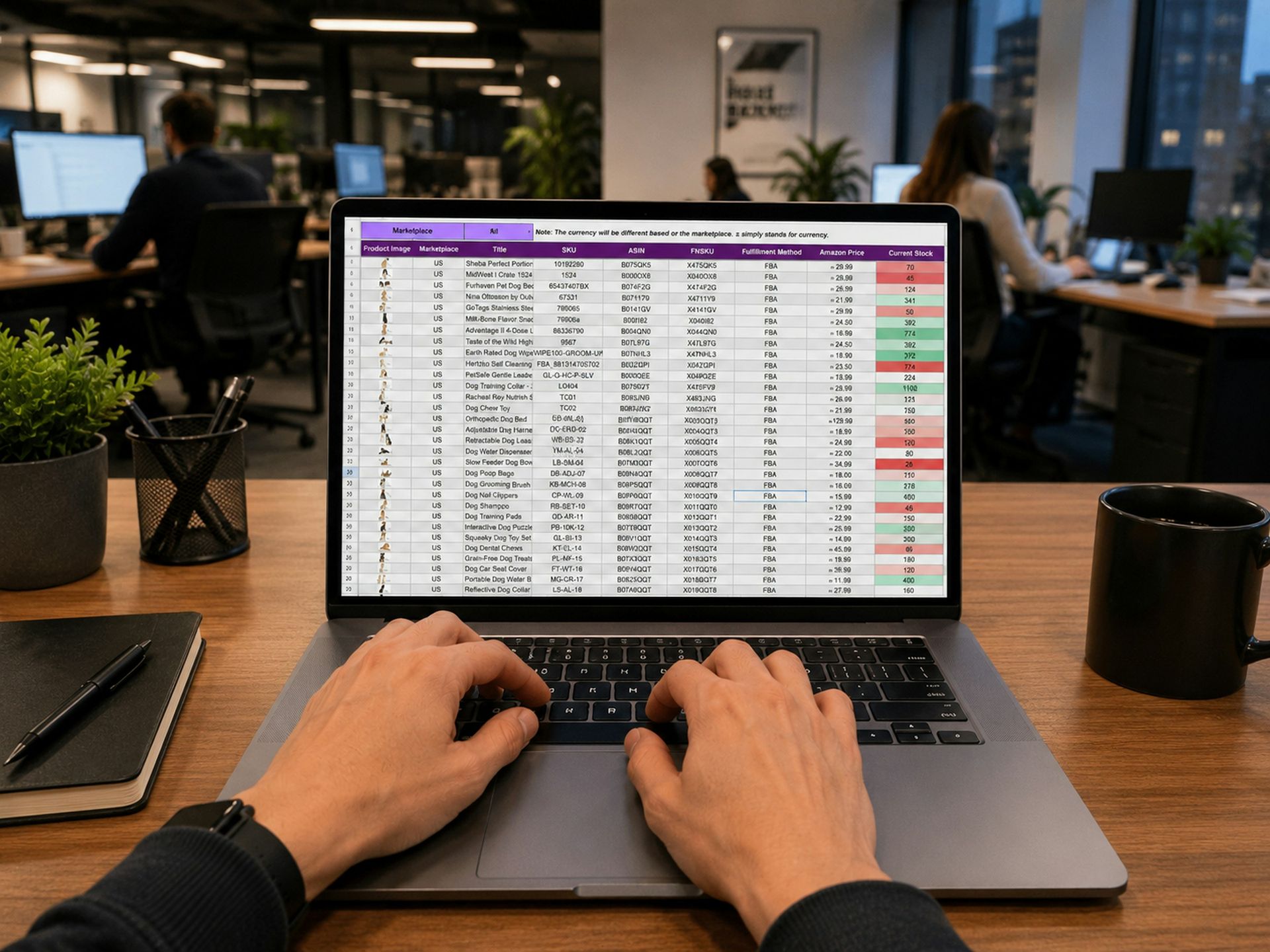
At a private hospital in Monterrey, someone in Purchasing has a regional distributor's quote for an intramedullary nail system on their desk. Before approving it, they copy the registration number listed on the quote and look it up in the COFEPRIS (Mexico) viewer. The registration shows up as valid, but under a legal entity name that doesn't appear anywhere on the manufacturer's website. The site uses only the trade name, and the product page has no registration number. The person in Purchasing writes to the distributor to ask for clarification, and the order is delayed by a week.
Nothing on the site was badly written. It was missing the two pieces of information the buyer went to cross-check.
Three purchasing paths, three ways of reading the site
In the public sector, purchases of medical supplies by federal health institutions go through consolidated procurement, awarded by Birmex, and federal contracts are published on Compras MX, the platform that replaced CompraNet. Whoever prepares a bid for that channel doesn't read the home page: they look for the product page, the code for each product, the registration number, and the documents they'll have to attach.
Private hospital groups buy differently, and each one has its own approval workflow. There, the site is usually opened by a surgeon who wants to see the technique before requesting the material, or by someone in Purchasing who wants to confirm who they're dealing with.
And between the two are the regional distributors. In a country this size, a distributor based in Monterrey can cover half a dozen states in the northeast and north-central regions. The website of a manufacturer that works with several of them has to say who covers each region. If it doesn't, an inquiry from a hospital in Tamaulipas ends up in the general form (we go into this in Who represents what in each country).
Manufacturing in Mexico can mean two things
Mexico has a large medical device industry, and much of it is along the northern border: plants that manufacture for foreign brands and export nearly all of what they produce. Those brands make their decisions at headquarters.
At the same time, there are manufacturers with their own brands that design and produce for the Mexican market, with plants in the center of the country. For a local buyer, “made in Mexico” can mean either of the two. A manufacturer in this second group has a story that maquiladoras don't have: what it designs, where it produces it, which surgeons it developed each system with, and which other brands it distributes in addition to its own. If the website tells that story with places, product line names, and dates, the difference shows without needing to be explained. When the catalog mixes own and distributed products, origin goes in as a field on each product page (we cover this in Own products and distributed brands in the same catalog).
The plant's certifications go on the company page, with their exact names. They describe the facility and its quality system, and they don't replace each product's registration, which is shown separately.
The registration, exactly as it appears in the viewer
On August 20, 2026, COFEPRIS released a viewer of current medical device registrations. Since then, any hospital, distributor, or competitor can verify a number without asking for it.
That changes the best way to show it. On the product page, the registration number and the holder go in as data, written exactly as they appear in the viewer, in their own field and not inside a paragraph. If a single registration covers several products, the product page says which ones. No adjective is needed next to the number: it's a fact people look up.
The holder is the most overlooked detail. Many companies operate under a trade name and register under a different legal entity name, or register under another company in the group. If that legal entity name appears on the company page and in the site footer, the buyer coming back from the viewer recognizes it and doesn't have to ask. What gets published on each product page is decided by the company's regulatory team; the website provides the field so the information is organized and exists in only one version.
A URL for the instructions for use
NOM-137-SSA1-2025, on medical device labeling, was published in the Diario Oficial de la Federación on May 19, 2026, and takes effect on May 14, 2027. It provides for codes, such as a QR code, that can take the user to a website with labeling and IFU information, without replacing or contradicting what was authorized in the registration.
For the website, this means there may be a URL printed on the packaging that has to keep working for the product's entire life. If the company decides to use that option, the URL is defined before printing, and the document it opens stays identical to the approved one (we go into this in The QR code is already printed).
Congresses
In orthopedics, the national meeting is FEMECOT's Congreso Mexicano de Ortopedia y Traumatología, which has an exhibit hall. The 2026 edition, the 36th, was held October 20–24 in Mexico City. Each specialty has its own, and most combine a scientific program with booths.
What the congress leaves on the website depends on what's prepared beforehand: the product page each piece leads to, the session with the specialist and their profile, the material that stays published once the event is over. We cover this in The congress starts before the booth opens and in The content that outlives the event.
What's usually missing
In August 2026, we reviewed the websites of eight Mexican orthopedic companies, a mix of manufacturers and distributors. Only two published their own technical or clinical content: surgical techniques, studies, articles on types of prostheses. Most had an up-to-date site and active social media, and no explanation of any product beyond its name and a photo.
The clearest case was a manufacturer with its own plant, two registered trademarks, and distribution agreements with international brands, whose website still had the design and structure of twenty years ago. Everything that set the company apart was in the plant and in its relationship with surgeons, and the website didn't show it.
Services covered in this article