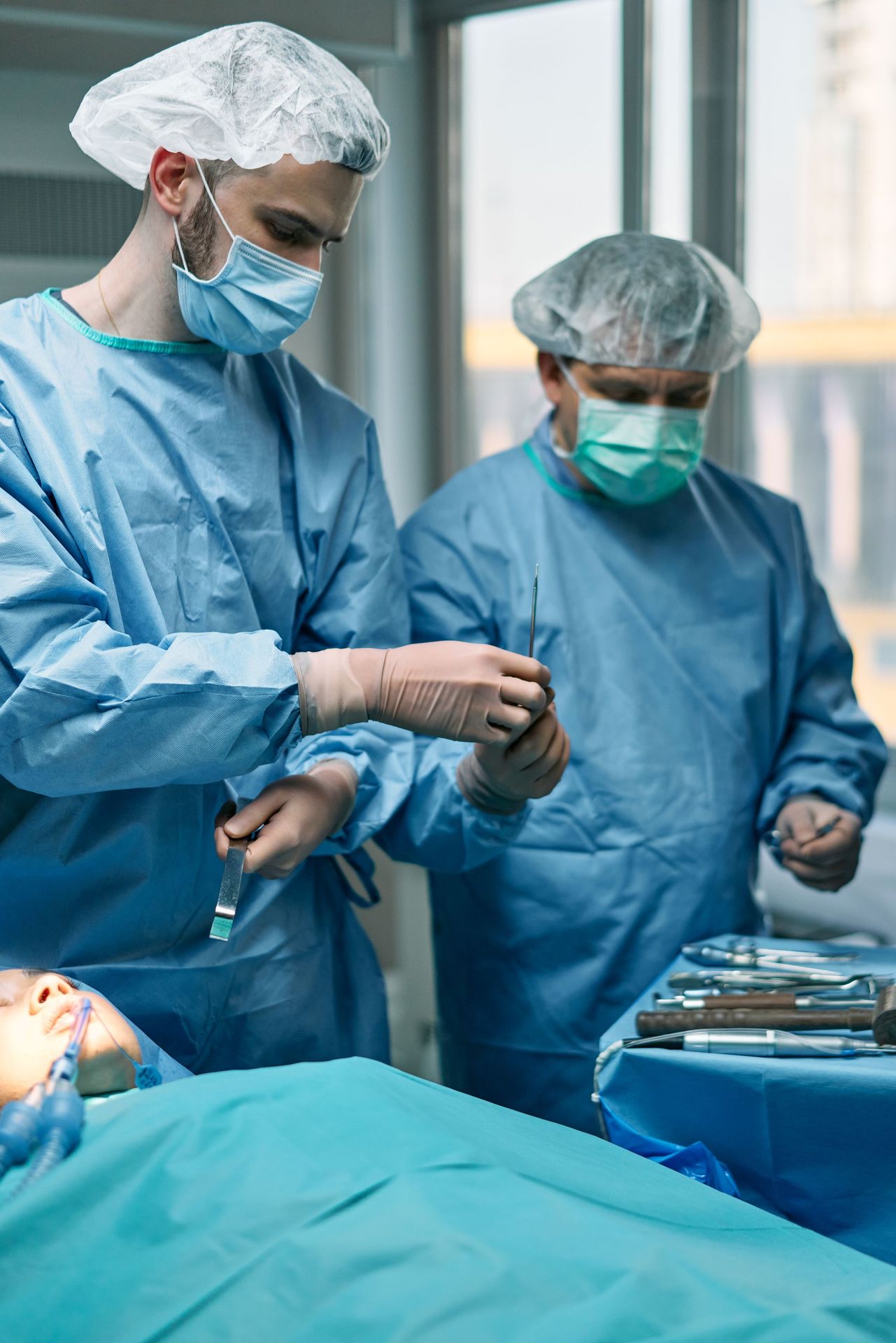
A product manager asks an AI assistant to turn the surgical technique guide for a plating system into a summary for the surgeons' newsletter. The result is well written and follows the steps. The last paragraph says the system “allows for faster recovery.” The technique guide doesn't say that, and neither does the IFU, and nobody at the company asked for it. The tool filled in the ending with what's usually said about similar products.
That sentence is a claim. If it's published, the company is asserting a clinical outcome that it hasn't approved.
Where AI gets medical content wrong
A language model writes what's most probable. When a piece of information isn't in what it was given, it fills in the gap. The highest-risk areas are the ones the industry already knows are sensitive: comparisons with other products (“stronger than”), efficacy figures, absolute statements (“complication-free,” “guarantees”), testimonials, and indications, which the tool tends to extend to adjacent procedures. Translation adds another risk: “may reduce” becomes “reduces” in the other language and nobody notices, because both versions read well.
There's a less visible error. If the source it's given contains an unsubstantiated claim, the AI repeats it in every piece, correctly citing the document. A sentence having a source doesn't mean it's approved. A sales catalog may contain statements that never went through Medical Affairs, and using it as a source multiplies them. That's why the source material is reviewed before production starts.
What the tool is given
A defined set of documents, with a written order of which one prevails when two say different things. At the top, the IFU and the regulatory documentation. Next, the validated surgical technique guide. The catalog is used for product data, such as sizes, materials, and codes, and not for clinical statements. A paper on a technique in general doesn't turn a claim into a claim about the product. Internal presentations and meeting transcripts go at the bottom.
Along with that set, a library of approved claims: the statements the company has already validated for each product, with their scope. And a formatting instruction: anything missing isn't filled in; it's marked as [data to be validated] in the draft. With those three things, the tool is designed to work with what it was given and to flag what it doesn't have. That reduces errors of this kind without eliminating them, which is why there's still a review.
The exact point where medical validation comes in
The generated draft goes through an editorial review first. Someone who knows the product checks each statement against its source and builds a simple table: the sentence, the document it comes from, whether it's technical, scientific, or commercial, the risk level, and whether it requires medical validation. Typos, tone, and product data are resolved at that stage.
Medical Affairs or the regulatory team then receives that clean draft, with the statements flagged and their sources alongside. They validate those sentences, not the whole text. A draft that arrives without a source for each statement goes back to the previous stage: reviewing a text like that forces Medical Affairs to do the cross-checking, which is exactly what isn't their job. Only after validation is it published.
When an IFU gets a new revision, the pieces that came from it are reviewed again. If the table of statements and sources is in place, they can be found by searching it for that document.
Product pages, translations, and brand copy
For technical data sheets, AI helps move the tables in a catalog into the product page fields. The codes are checked one by one against the document: a code with a single character changed is a different product. In translation, the tool produces the first version, and someone who knows the medical terminology in the target language reviews it, paying special attention to the verbs that determine how much is being claimed.
For brand copy and corporate sections, AI's role is to organize and speed up what the teams already know. At SAI, an Argentine orthopedic manufacturer and distributor, the website copy was put together this way: the teams provided the specific data, AI helped turn what was gathered in discovery into a narrative foundation for each section, and the copy went back to the teams for review before it was published. The data for each product was provided and approved by people at the company.
Services covered in this article