Real searches
We review the queries and pages that already bring in impressions or clicks to understand what the audience calls each thing.
Creativity · Strategy · Development · Impact
Services › Impact and evolution › SEO
We work on structure, pages, searches, and migrations so products, documentation, and content each have a stable URL that search engines can find and that can be maintained over time.
SEO starts with how the site is organized and what people actually search for. It isn't separate from the catalog, the copy, or the decisions made when a new website replaces an old one.
People search for the product. Google returns a PDF.
We review the queries and pages that already bring in impressions or clicks to understand what the audience calls each thing.
Products, categories, and content with URLs and relationships that search engines can crawl.
We work on titles, headings, and internal links so each page answers the search query it's meant to address.
We identify the files that get traffic or compete with new pages, and decide what to do with each one.
We inventory URLs, define destinations, and verify redirects as part of the website project.
Search Console and analytics show which pages gain or lose visibility and which queries open new opportunities for content or structure.
How it works
We gather pages, documents, queries, and current signals to see what has already accumulated value.
We define which new URL corresponds to each important asset and which pages need additional content to take on that role.
Structure, internal links, metadata, and redirects are adjusted within the site.
Changes are tested before and after going live.
We compare equivalent periods and review specific queries and pages.
The next decisions come from what the data shows, not from a promise of a guaranteed ranking.
Work · SAI
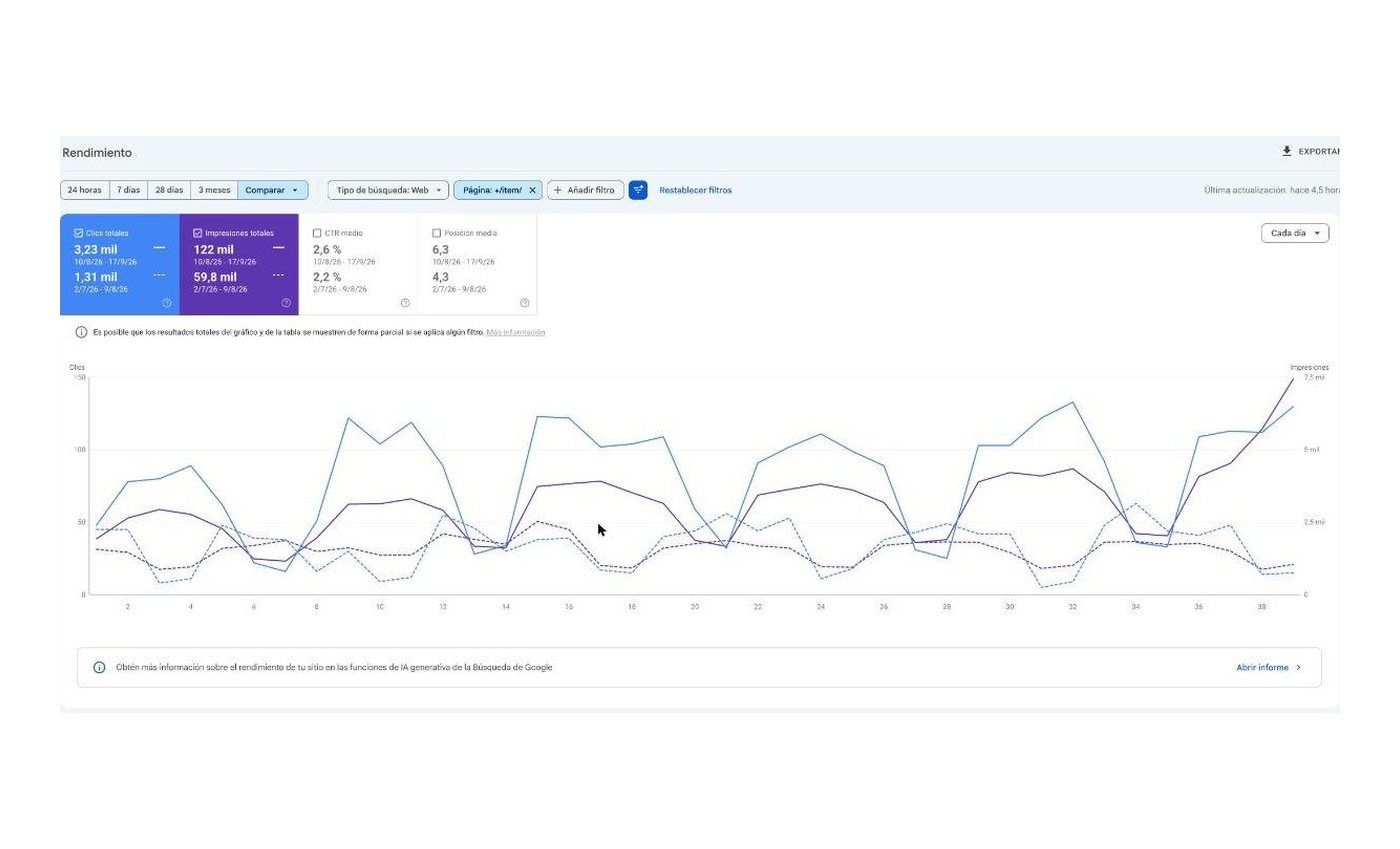
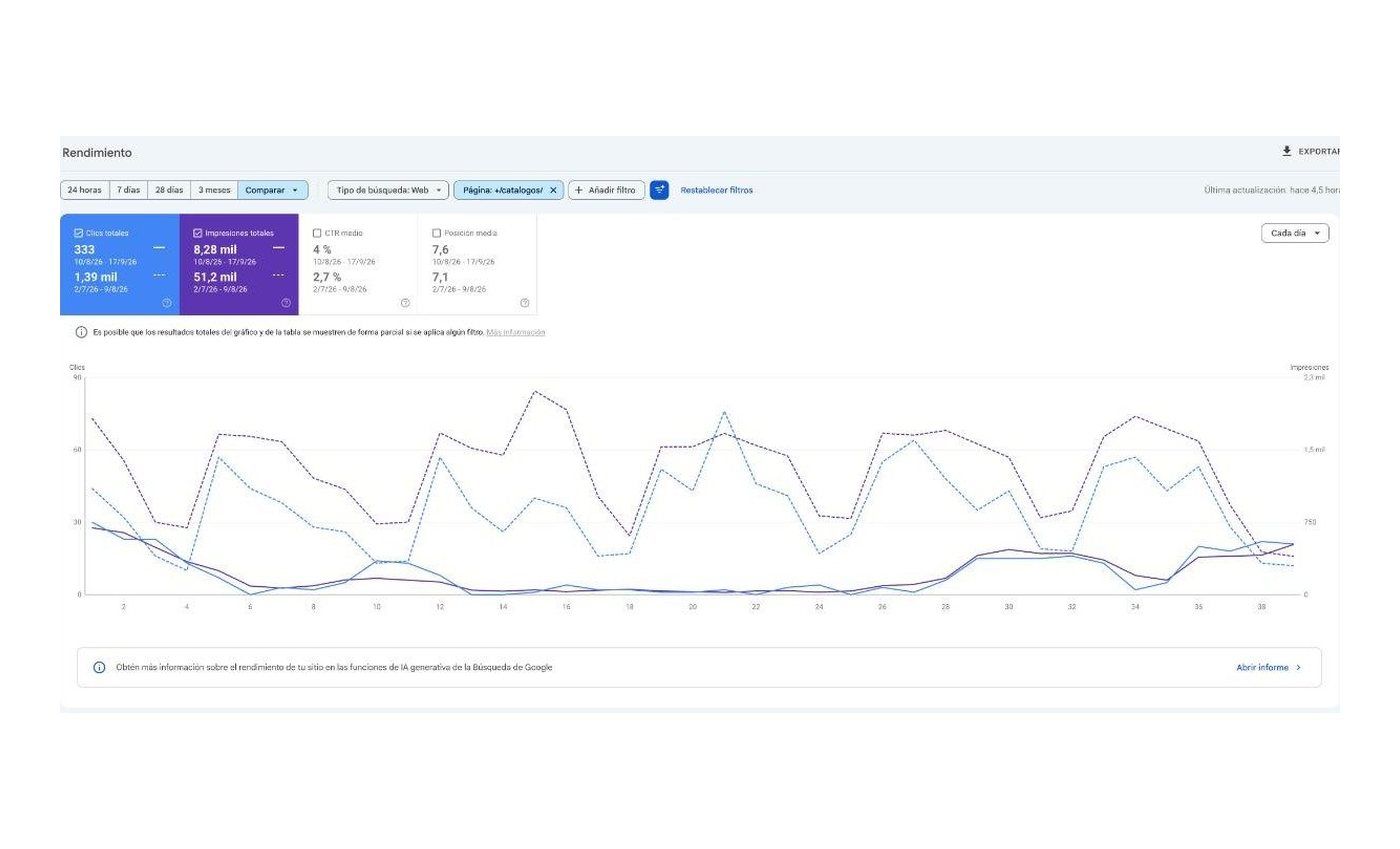
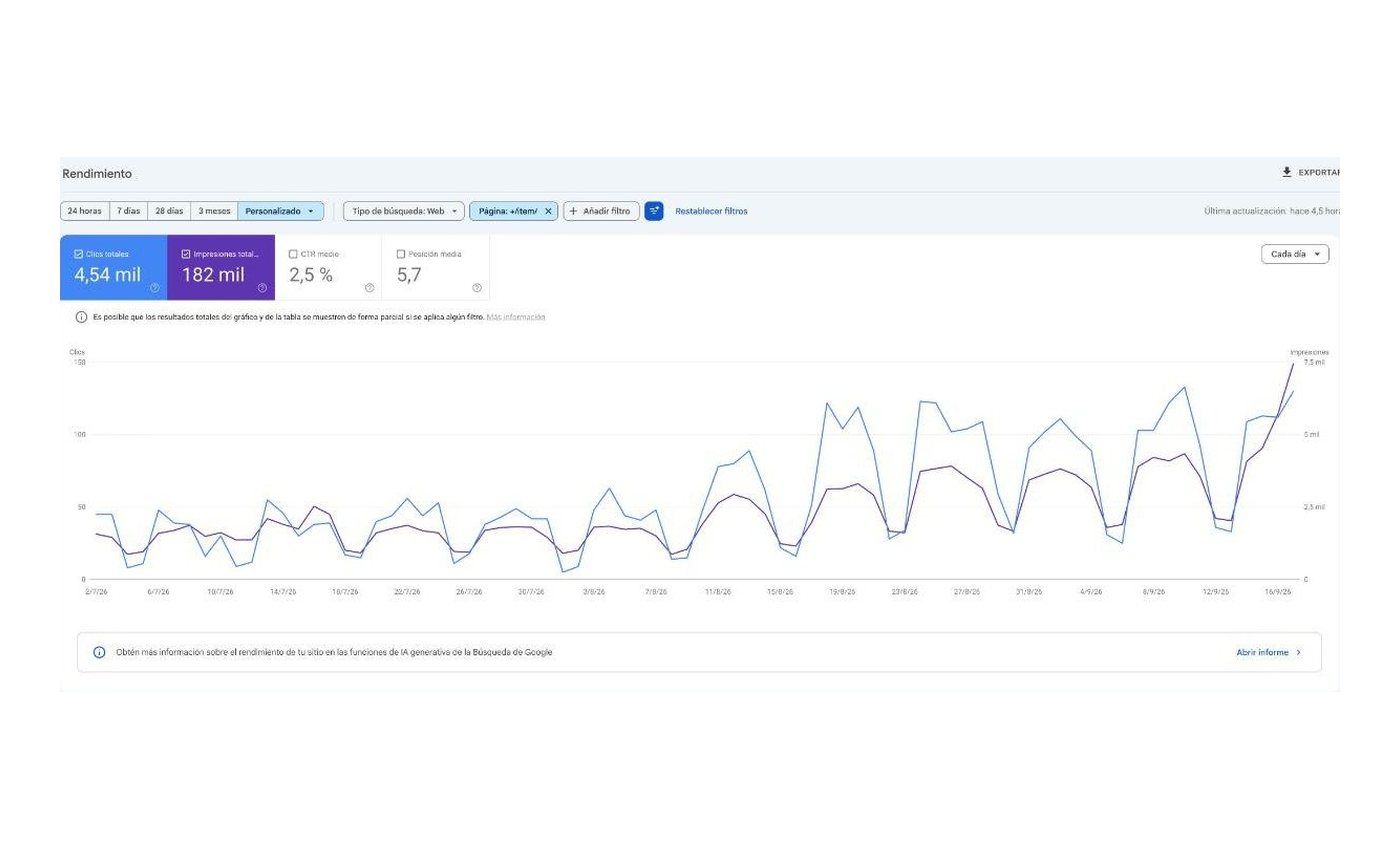
In the 39 days after SAI's new site launched, product pages went from 1,308 to 3,227 clicks compared with the previous 39 days. In the same period, catalog PDFs dropped from 1,391 to 324 clicks.
If its products are searched for by name, anatomical region, or procedure, yes: that search lands on some page, and it's better if that page is the product page. A company with few products and an audience that already knows it has less to gain.
No, and nobody can honestly do that. We work on the factors within the site and measure which searches bring people in and which pages they reach, before and after each change.
Optimized copy goes through the same validation workflow as any other copy, and the plan allows time for it. Much of the work doesn't affect what's said about the product: redirects, internal links, structured data, and speed.
With an inventory prepared beforehand: every URL with traffic or external links, every PDF Google has indexed, and its destination on the new site. After launch, each redirect is verified and progress is tracked in Search Console.
They aren't deleted overnight: if there's already a product page for it, the PDF is redirected to it or linked from it, depending on the data. If it's an IFU, the company's regulatory team decides which version its URL should lead to.