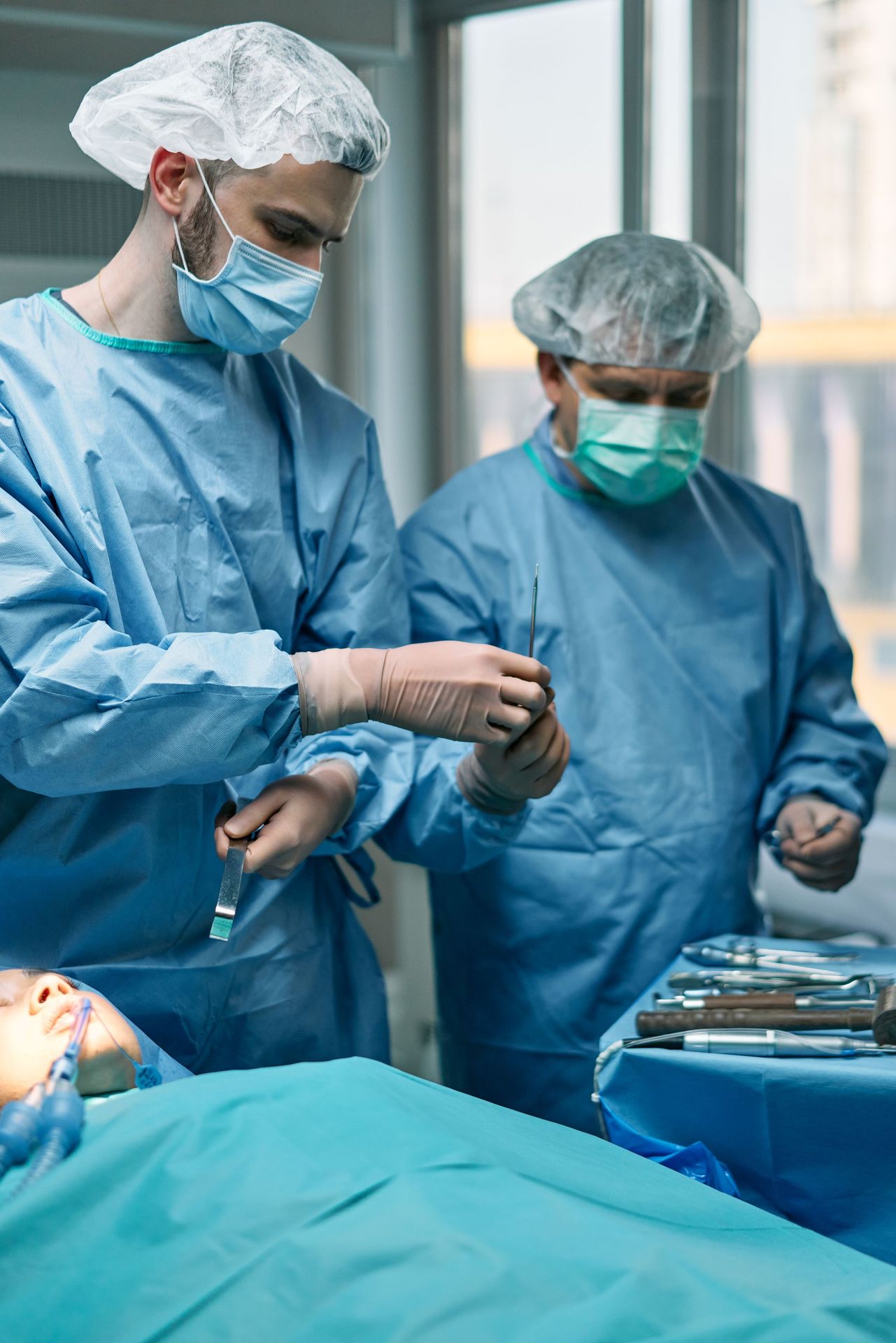
A two-day cadaver lab comes to an end. There were hands-on specimen stations, several faculty members who explained their approach, an instrument set many attendees used for the first time, and a round of questions that ran longer than planned. The following Monday, an article goes up with six photos: the auditorium, the group with the faculty, two gloved hands over the table. The program, the presentations, and the questions stay in a shared folder.
For the surgeon who couldn't travel, or the resident looking for that course three months later, the website keeps a record that the lab took place, and little else.
What the event leaves behind
A lab like this produces a lot of material before anyone takes out a camera. There's a program with objectives and procedures for each station. There are faculty members with a specialty, a track record, and their own way of explaining each step. Every technique that was practiced uses an implant or an instrument set the company has in its catalog. And there are the attendees' questions, which are usually the same ones another orthopedic surgeon will ask when facing that procedure.
Each of those things has a different shelf life. The group photo works for the week of the event. The technique from the third station stays relevant as long as the product remains in the catalog, and the faculty member's profile is useful for every course they return to teach.
The event news post and the course archive
The news post reports that the lab took place. The archive answers something else: what was taught, who taught it, and with what material. For that archive to exist, the site needs course, event, and faculty member to be content types of their own, linked to one another, instead of a blog post where everything is pasted together.
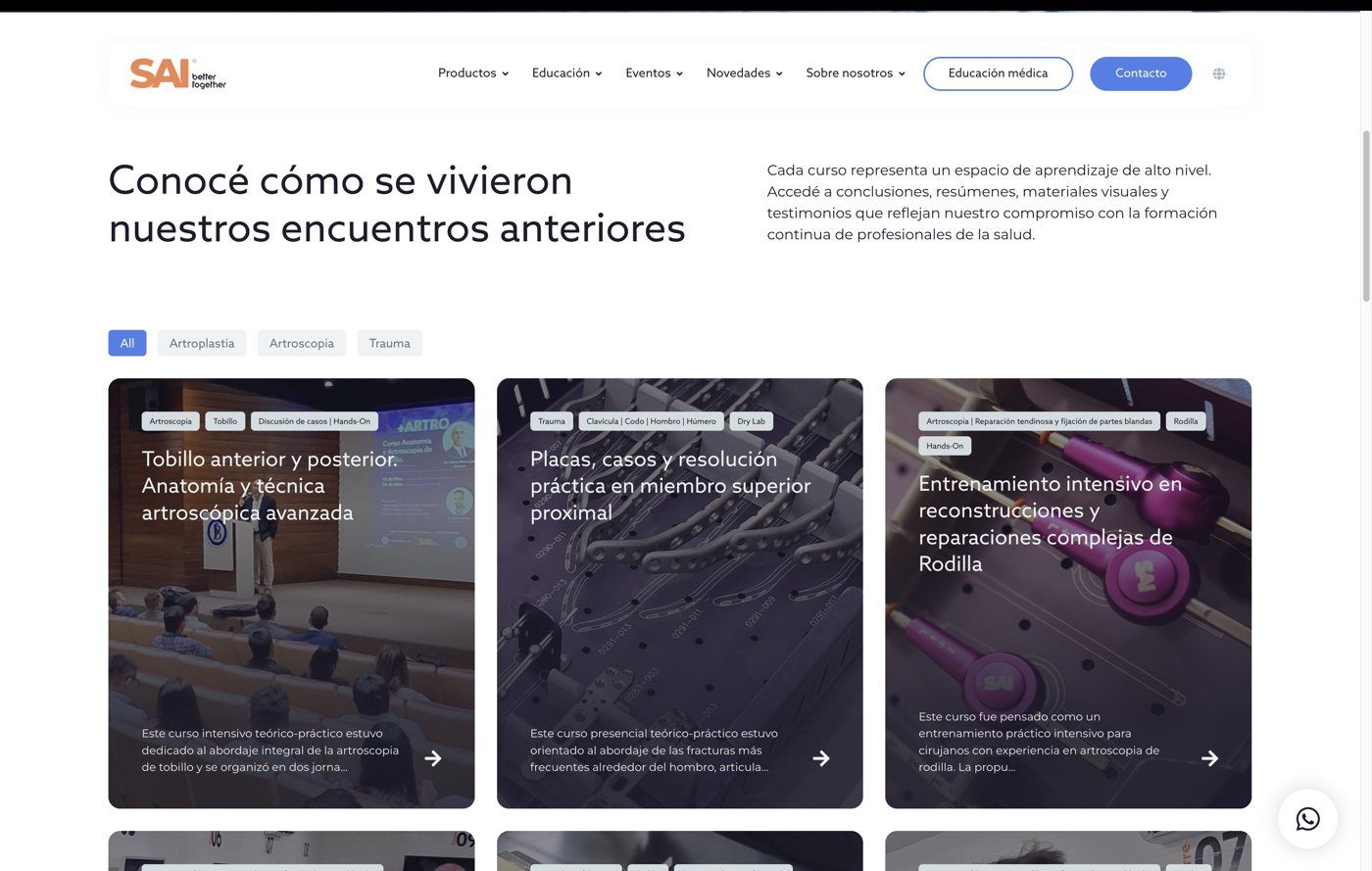
With that structure, a faculty member's profile is entered once and appears in every course they take part in. A past course isn't deleted: it stays in an archive of past sessions, filterable by specialty, with its summary and materials. The next edition of the same lab already has a place to show the previous one.
From the lab to the product page
The most useful relationship is the one that links the technique to the product. If a ligament reconstruction was performed at one station with a specific set, the course page links to that set's product page, and the product page shows the courses where people were taught to use it, along with the technique video, if there is one. People who arrive through the training find the product. People who arrive through the product find out there's training.
The questions that came up during the lab can become a short section on the course page or a piece in the library. What gets published, and in what wording, is decided by the company, with validation from its Medical Affairs team; our job is to make sure it has a designated place and stays connected.
At SAI, the material existed but didn't reach the website
In the communication analysis we did for SAI, medical education accounted for 70% of what the company communicated. That's where the opening scene came from: a two-day cadaver lab ended up summarized in six photos and an article, when what had been produced was enough for months of posts.
We flagged it as an opportunity in that analysis. The current website already has the structure to support it: courses, events, and faculty members are content types of their own, and there's an archive of past sessions and a medical education library.
What to decide before the next lab
What can be published afterward depends on what was recorded during the lab. That's why the decisions are made with the program in hand, before the date.
For each station, it's worth writing down which procedure is covered, who explains it, and which product is used. Someone on the team takes notes on the questions, with the name of the station where each one came up. If there's filming, what counts as a complete technique for the library and what counts as a clip for social media is defined in advance, because they're filmed differently. The course page goes live before the lab, with registration, and afterward moves to the archive with the summary and materials.
With that record, the publishing order comes from the material itself. First the article about the event, then the complete course page and the faculty profiles, and later the techniques in the library and their links to the product pages. Each technique can have its own piece, and each one adds different information, instead of spreading the same six photos across several social networks.
A simple test for the week after the lab: search the site for the name of one of the faculty members and the name of the technique from the first station, and see what comes up.
Services covered in this article