An orthopedic surgeon has a ligament reconstruction scheduled with a system he has used only a few times. The night before, he opens YouTube and types in the name of the procedure. The manufacturer's channel has two videos: a corporate one, with the plant, drone shots, and music, and an eleven-minute one in which a surgeon demonstrates the technique step by step on a cadaveric specimen. The second one has worse lighting. It's the one he watches to the end.
What the channel's numbers showed
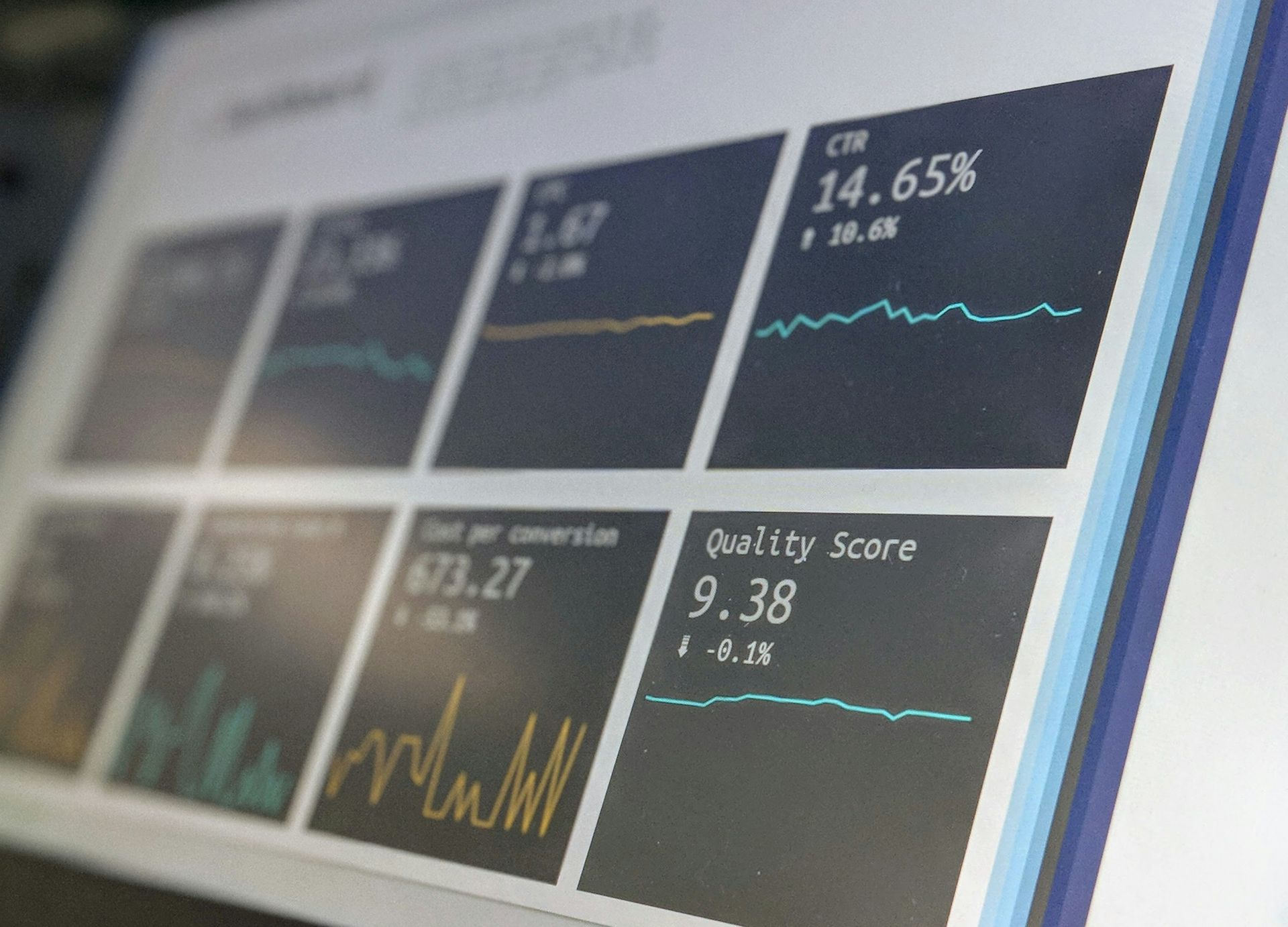
On SAI's channel, the difference showed up in the analytics. In a review of the YouTube channel on July 24, 2026, a surgical technique video had about twenty times more views than a promotional video used for comparison, and better retention as well.
The sales video has its place: a presentation to a distributor, the company's page, the opening of a congress. The technique video circulates along a different path. The people who look for it already have a procedure in mind and want to see how it's done with those instruments, in what order, and with what precautions.
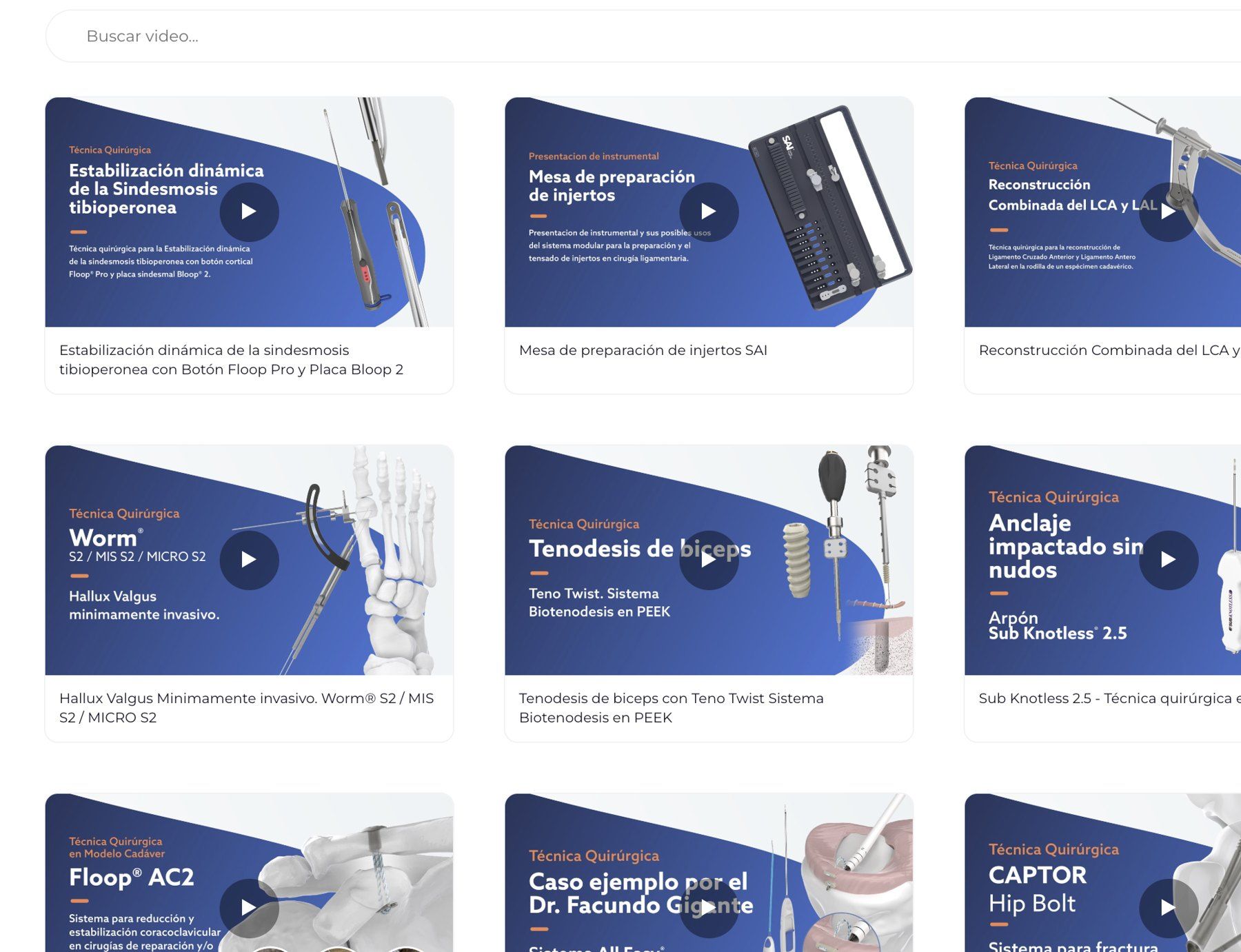
The title is a clinical term
A surgeon types precise words: the name of the procedure, the anatomical structure, sometimes the acronym. “Our knee technology” doesn't match any of those searches. “Combined ACL and ALL reconstruction” does.
That's why the title of a technique video is set by the company's Medical Affairs team, just like the name of the technique on the product page and in the brochure. If the video says one thing, the PDF another, and the product page a third, the site search returns incomplete results, and the physician isn't sure whether it's the same procedure. At SAI, Medical Affairs sets that terminology, and it's the same in the video, on the product page, and in the brochure.
A stable place on the website
YouTube recommends individual videos. A technique video that only lives on the channel depends on someone remembering its exact title or on the algorithm showing it again. In the channel's chronological list, a technique published two years ago gets buried under the latest uploads.
On the website, that video needs two places. One is the medical education library, where it can be found by procedure, anatomical region, or specialty, using the same vocabulary that organizes the catalog. The other is the product page of the device used in the technique. A surgeon looking at a ligament reconstruction system sees, on the same page, the procedure video, the technical catalog to download, and the codes.
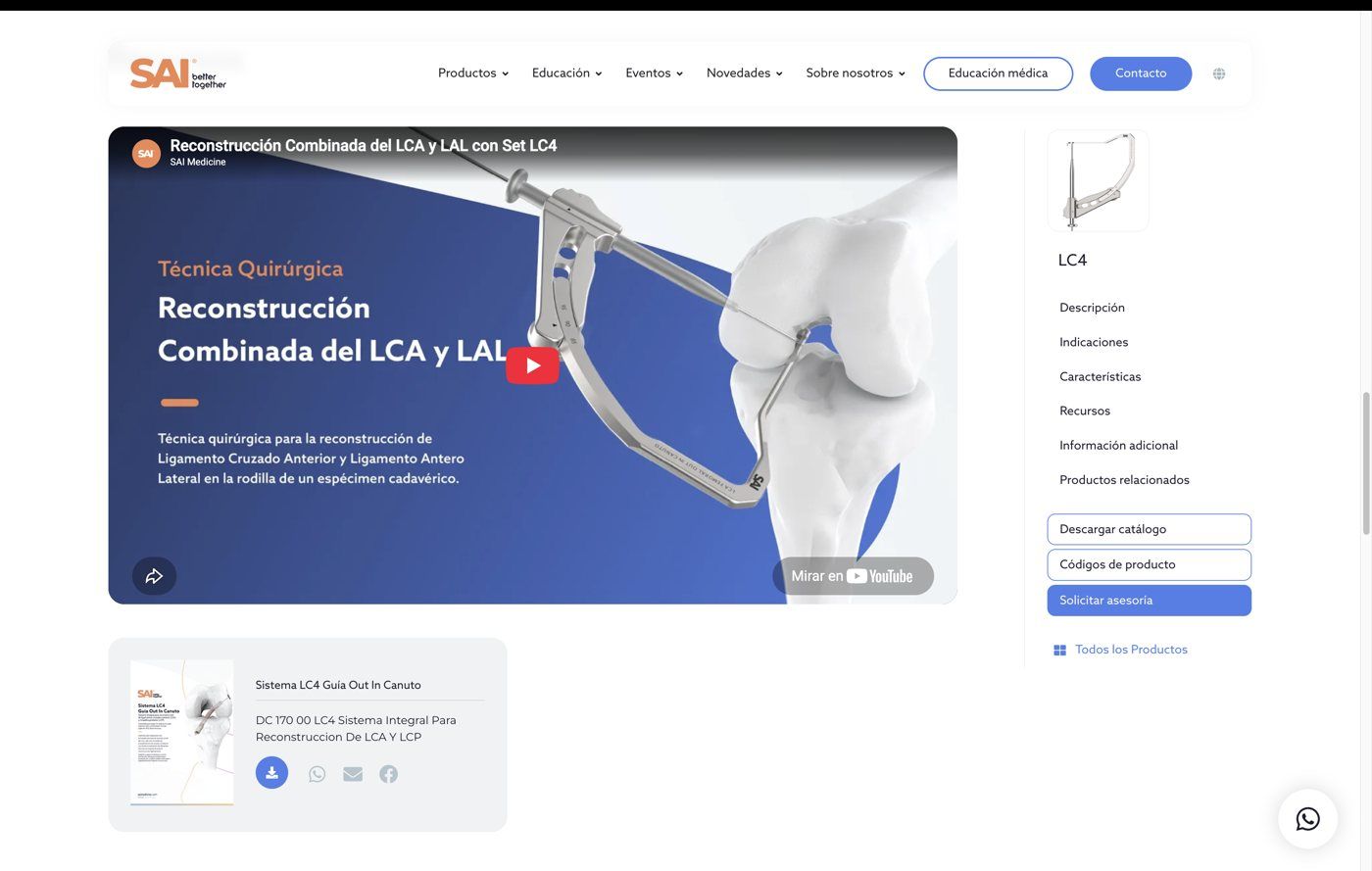
The relationship also works the other way around. The video's description on YouTube links to that product page or to the technique's page in the library, not to the website's front page. If the link leads to the home page, the physician has to start searching all over again.
The faculty member, the course, and the video
Many techniques are recorded at a course or a congress, with a guest surgeon. Their name appears in the video description, in the course program, and in the article about the event, sometimes spelled three different ways.
When the faculty member has their own profile on the website, that information is entered once. The video is linked to the profile and to the course where it was recorded. Someone who arrives through the video can see what other courses that faculty member has taught, and someone who comes in through the course finds the recorded technique.
How to read a comparison like this
Comparing views between a video from years ago and one from last week favors the older one. For the comparison to mean anything, it has to look at videos of similar age, at retention as well as views, and at where the audience came from: YouTube search, Google search, the company's own website, a shared link.
On the website, it's possible to measure what YouTube doesn't see: how many people open the video from a product page, how many go from the library to a product, and which techniques are searched for in the site search without returning a result. That last list shows which video still needs to be recorded.
Services covered in this article