Audiences and segments
We define groups by interests and relationship with the company, using data the company can maintain.
Creativity · Strategy · Development · Impact
We design newsletters and email sequences as an owned editorial channel that connects products, courses, documentation, events, and content to audiences who already have a relationship with the company.
We work on the channel's strategy, structure, content, and measurement. Paid campaign management and the sales work that follows are outside this service.
Email can open the conversation. Content needs somewhere for that conversation to continue.
We define groups by interests and relationship with the company, using data the company can maintain.
We organize what kinds of updates belong in the channel: products, education, events, documentation, or editorial content.
A pace that can be sustained with real content and adjusted based on how the list responds.
We design reusable formats so every email has a clear hierarchy and a recognizable primary action.
Each email leads to a page or resource that remains available after the email is sent, so the destination can be measured and reused.
We review opens when the platform makes them available, clicks, and actions on the website to learn which topics and destinations generate real engagement.
How it's built
We review how the list is organized, what permissions exist, and which segments can be maintained with the current data.
We connect newsletters to launches, courses, events, content, and moments when email can provide another way to reach the audience.
We define templates, hierarchies, subject lines, calls to action, and basic rules so the emails remain consistent.
Clicks and the paths people take afterward help adjust topics, frequency, and segmentation.
The channel becomes more useful as it accumulates its own signals.
Work · SAI
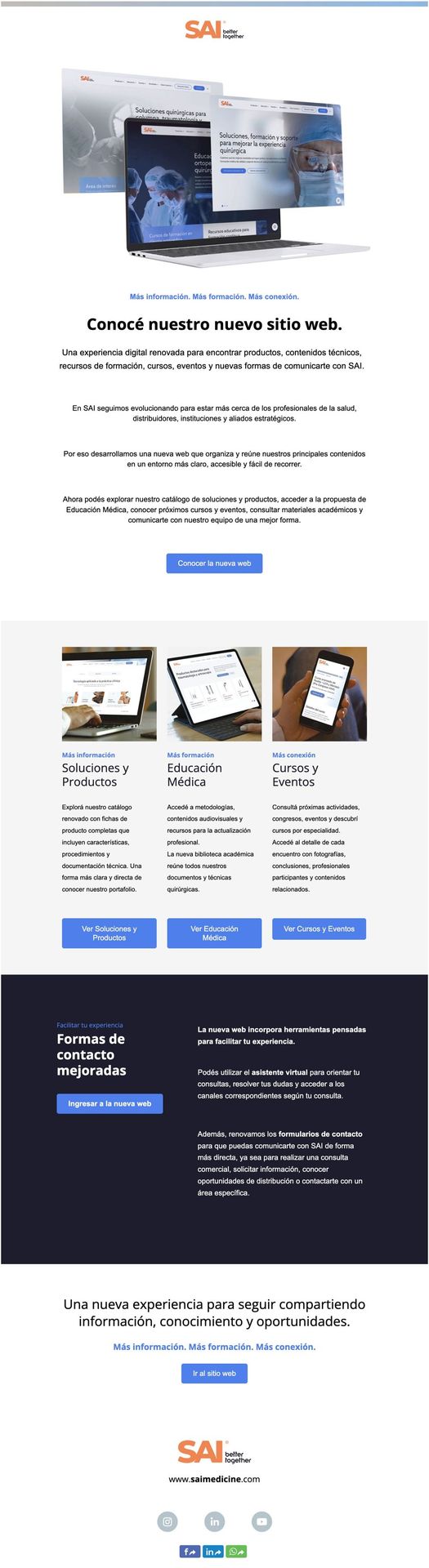
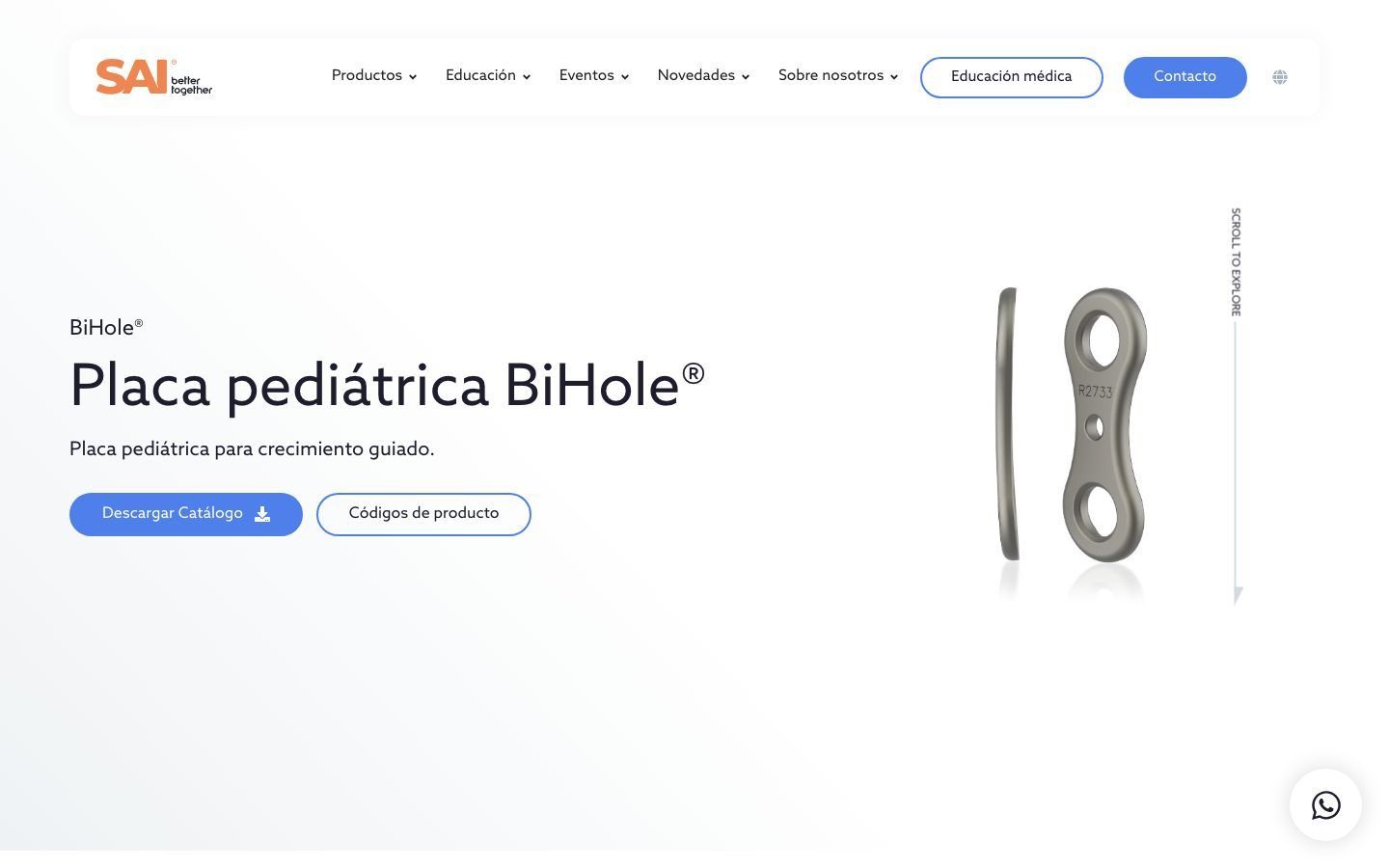
For the launch of SAI's new platform, a general newsletter was planned along with dedicated emails for products and education on different days.
Not necessarily. If the company already uses an email platform, the first step is to review what it can do with the current list, how it stores interests, and which data can be used consistently.
Some information can be shared, but each audience has a different reason for reading it. The work is deciding which part is common and which needs its own version.
No. This page is about communication with the company's own list. Paid media and performance operations are out of scope.
It depends less on size than on the quality of the relationship. A small, well-segmented list can be useful if there's a concrete reason to keep communicating with that audience. If there's no content, no news, and no continuity, it's better not to force the channel.