Offering
We review how each company presents its portfolio: brands, families, specialties, and services, and what that structure says about its priorities.
Creativity · Strategy · Development · Impact
We study how other companies present their portfolio, which topics they cover, how they structure their websites, and what language they use to enter a category or market with more context.
The analysis helps recognize conventions, spot underexplored spaces, and understand which decisions should be grounded in the company's own reality instead of repeating what already exists around it.
Looking around helps distinguish a market convention from an internal habit.
We don't use a generic benchmark for every project. We choose competitors, benchmarks, and markets based on the open question.
We review how each company presents its portfolio: brands, families, specialties, and services, and what that structure says about its priorities.
We look at navigation, catalog, search, documentation, and training: what exists and what's missing.
We analyze the messages, tone, and claims visible in what each company publishes; their regulatory limits are defined by each company's own team.
We review which pages show up in search engines, what types of content benchmark companies develop, and which market questions are being answered by competitors, media, distributors, or standalone documents.
We compare how the same company presents itself by country, language, or distribution, to separate the global from the local.
The work ends in actionable findings: crowded spaces, gaps, useful conventions, and decisions that need deeper investigation.
How it works
We define which decision needs context: positioning, launch, expansion, catalog, content, or redesign.
That determines which companies are worth including.
We select direct competitors, global benchmarks, and cases that handle one specific part well even if they don't compete in the same market.
We use the same criteria for all of them: offering, structure, content, search engines, experience, and whatever is relevant to the project.
That avoids conclusions built from isolated impressions.
We use the comparison to inform the company's own decisions.
What's worth keeping because the market already understands it, what deserves a different answer, and which questions still need internal information before moving forward.
Work · SAI
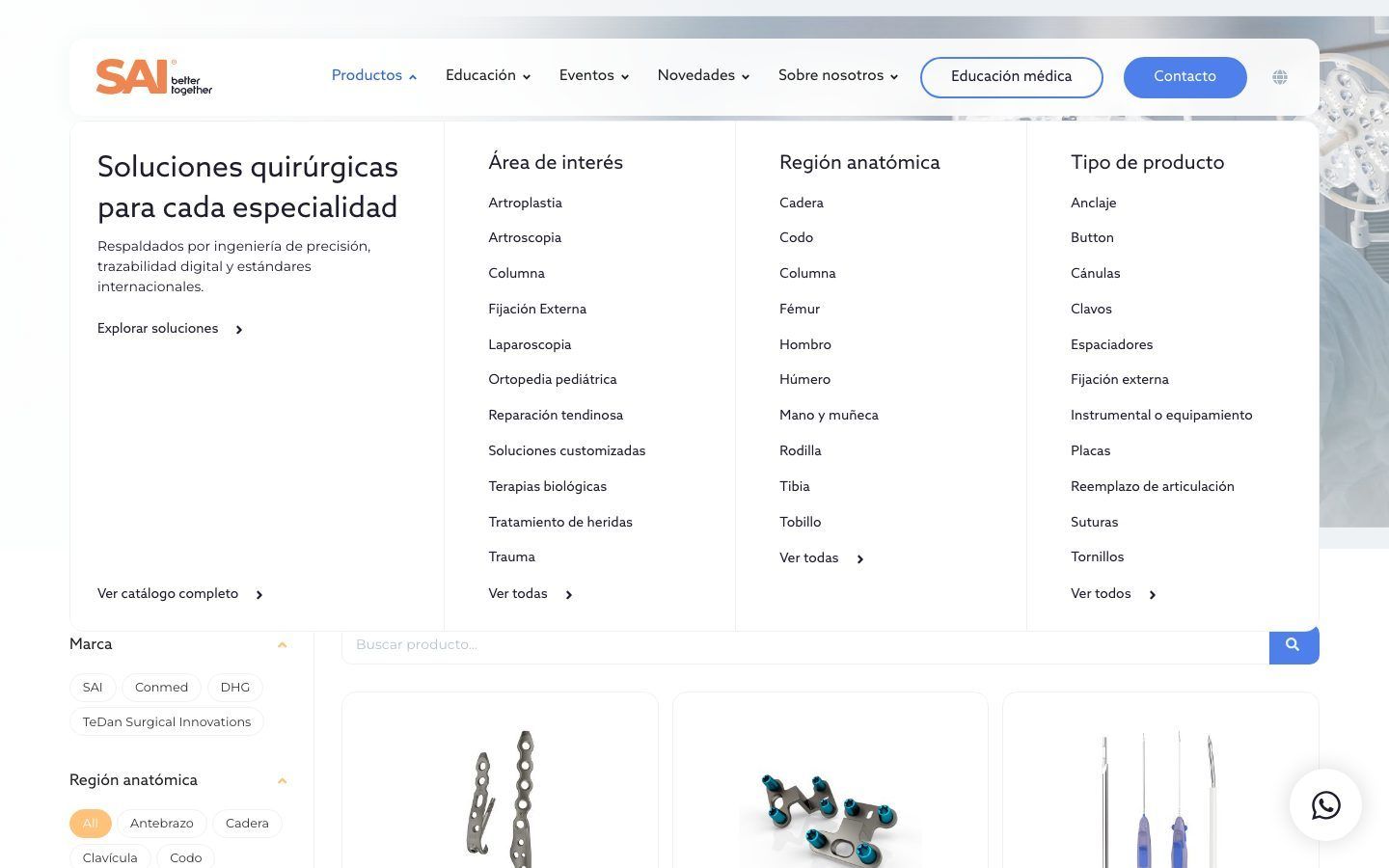
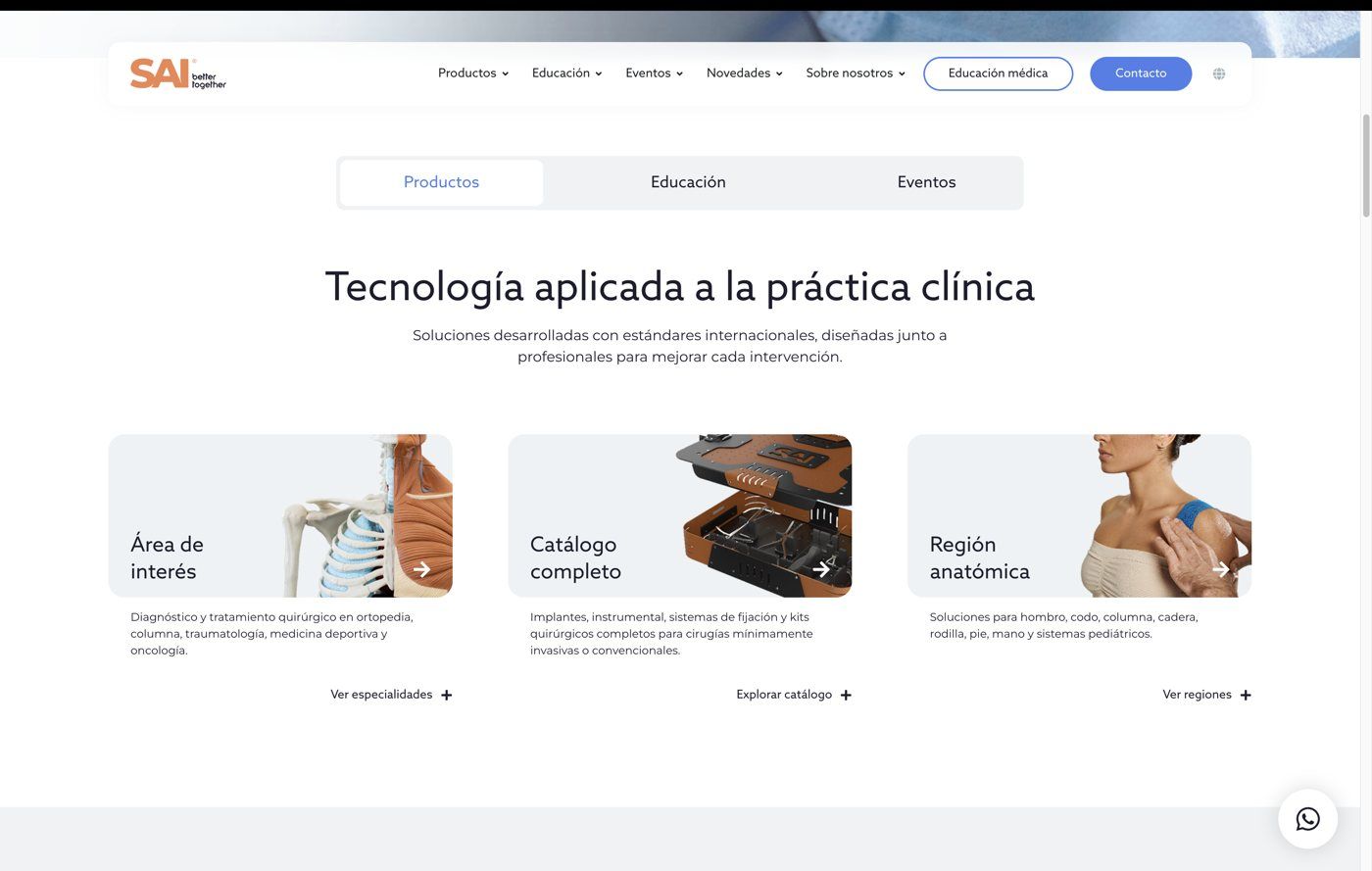
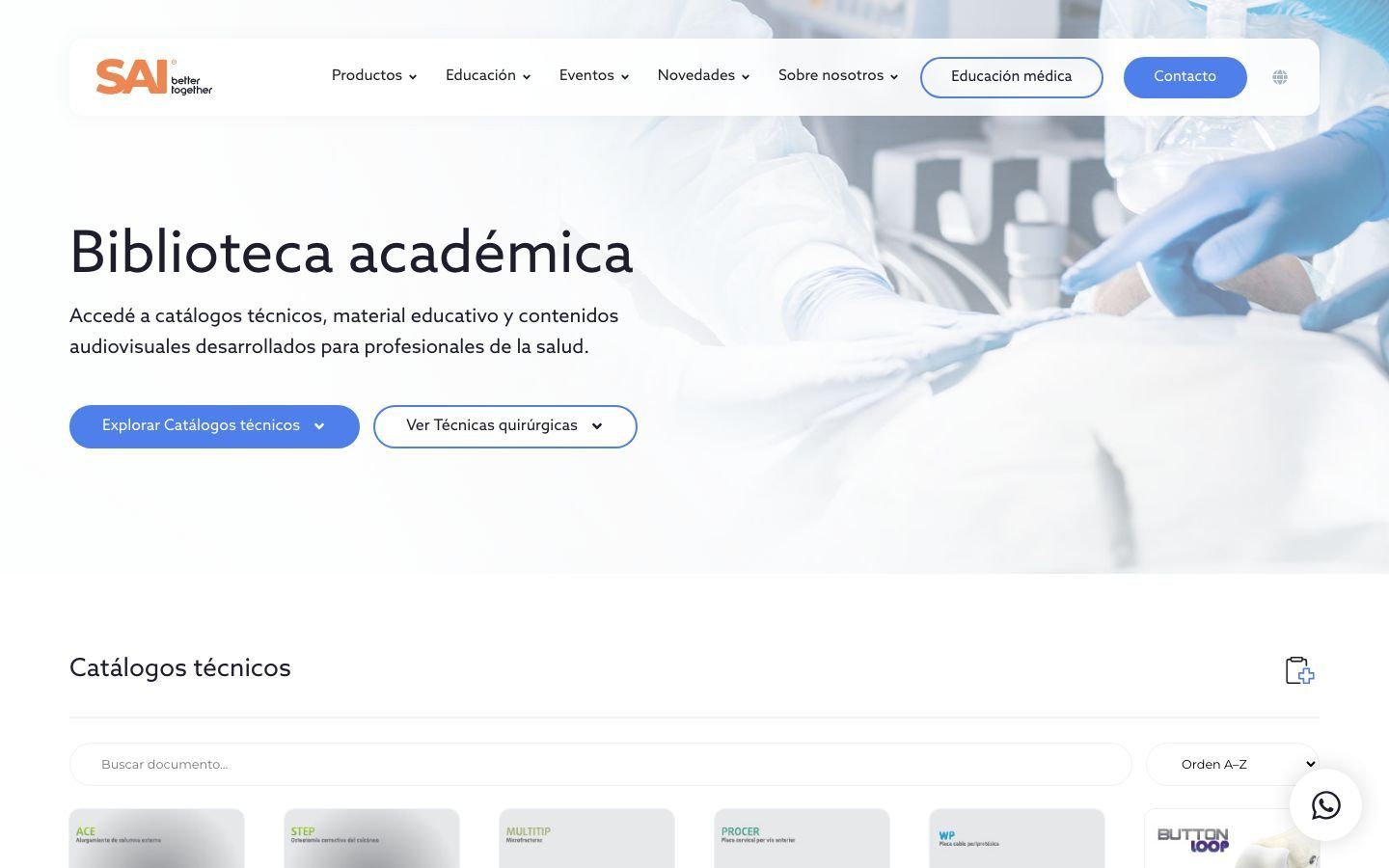
During the SAI project, we studied benchmarks such as Smith+Nephew, Arthrex, Stryker, DePuy Synthes, and ConMed to compare catalog, education, documentation, and ways of presenting the offering.
Competitors and benchmarks by country, how they present their catalog and documentation, which messages they repeat, how each audience searches, and what space is still open.
Yes, when the company operates in several countries. A competitor can have a well-developed website in one country and depend on a distributor in another.
It looks at how others communicate. What can be published in each country is defined by the company's regulatory team.
In how the offering is presented: the distributor's own catalog, organization by procedure, easy-to-find documentation, and training. The analysis shows where there's room.
It stays with the company and feeds into positioning, content strategy, or the website.