Manageable templates
We build page types and reusable components so new content fits into a known structure.
Creativity · Strategy · Development · Impact
Services › Web design and development › Website development
We build websites the team can manage for medical device companies where products, documentation, languages, forms, and content need to live together within a structure that can keep growing.
Development turns architecture and design into templates, fields, relationships, site search, and integrations the team can use without turning every update into a development request.
The next product needs a structure that already knows where to put it.
We build page types and reusable components so new content fits into a known structure.
Products, documents, courses, and brands are entered as related information, ready for filters and listings without repeating data.
We build site search around the ways people actually look things up and make sure performance holds up when filters are combined.
Each language has an equivalent structure and the signals search engines need; the translation follows its own workflow.
We implement forms and connections, and first map what data each external system holds.
Clear fields, consistent rules, and documentation so the team can add content without depending on whoever built the site.
How it's built
We translate content types, fields, and relationships into an architecture that can be implemented.
Dependencies, languages, site search, documents, and integrations are reviewed before templates are built.
The visual system becomes reusable components and behaviors.
States, responsive behavior, and rules are defined so pages stay consistent with different content.
The templates, admin, search, filters, forms, and connections in scope are implemented.
The work is tested with real content, not just with sample records.
The public experience, the admin, and the update workflows are reviewed.
The team receives a structure ready to operate and, when appropriate, training for routine tasks.
Work · SAI
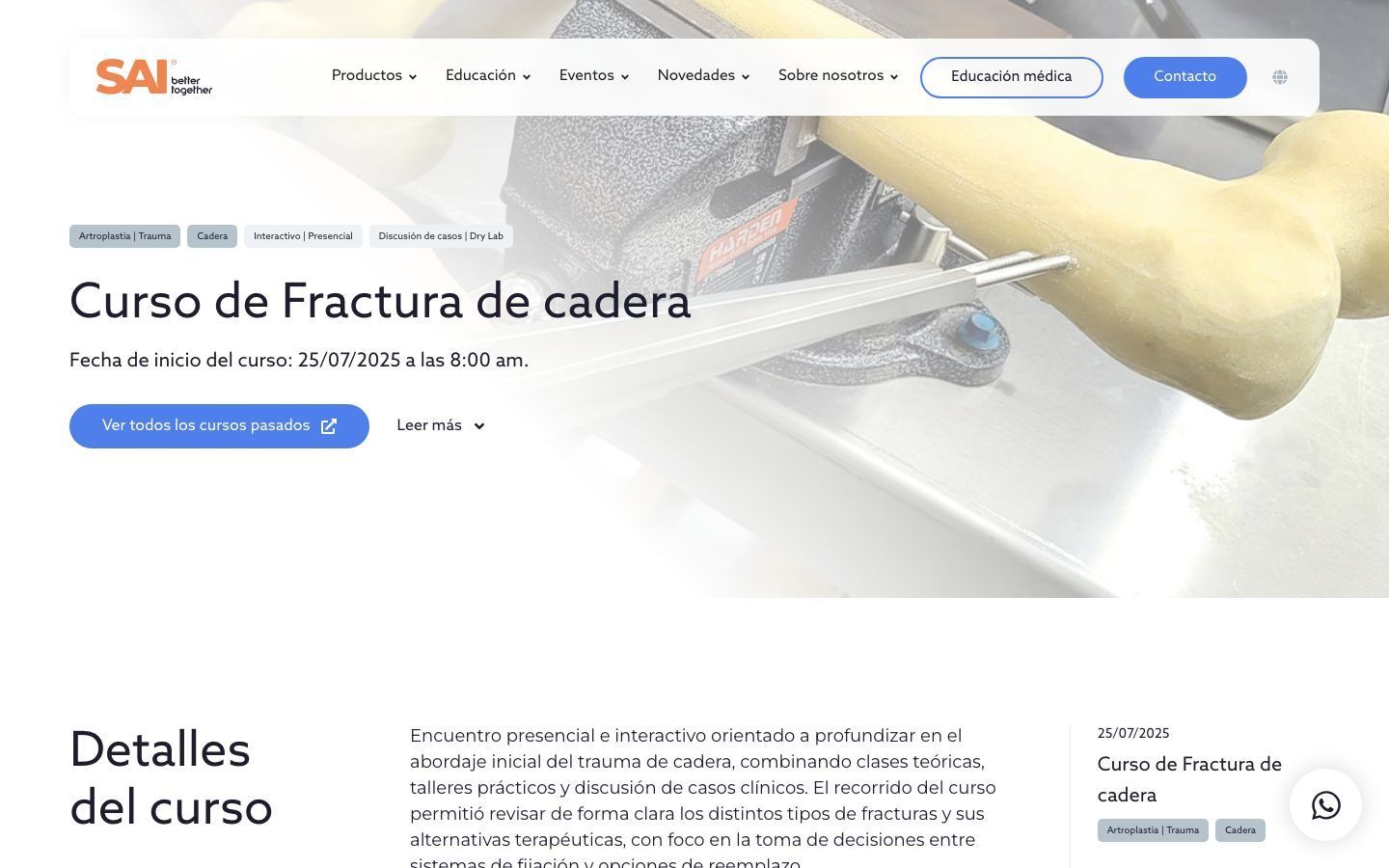
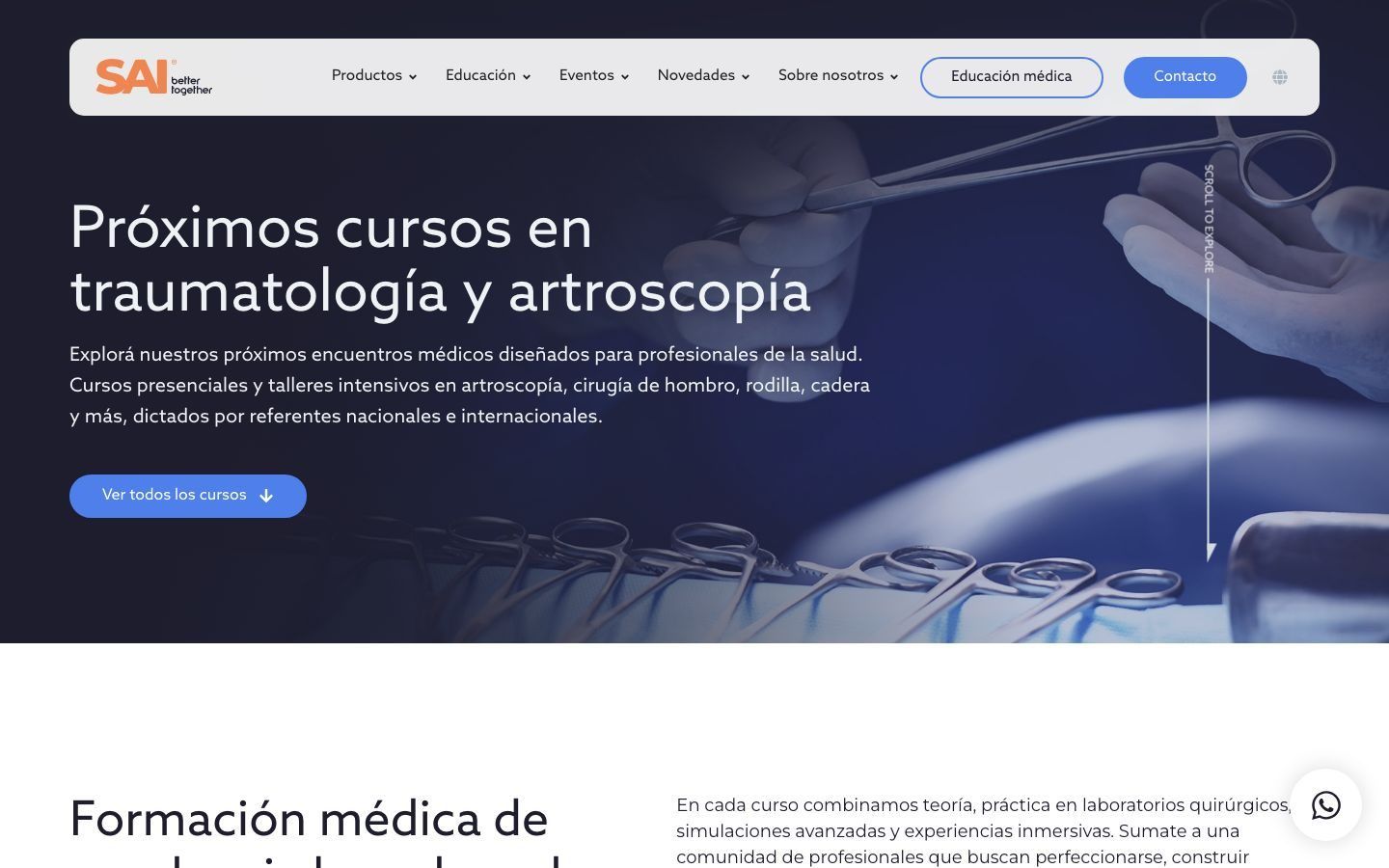
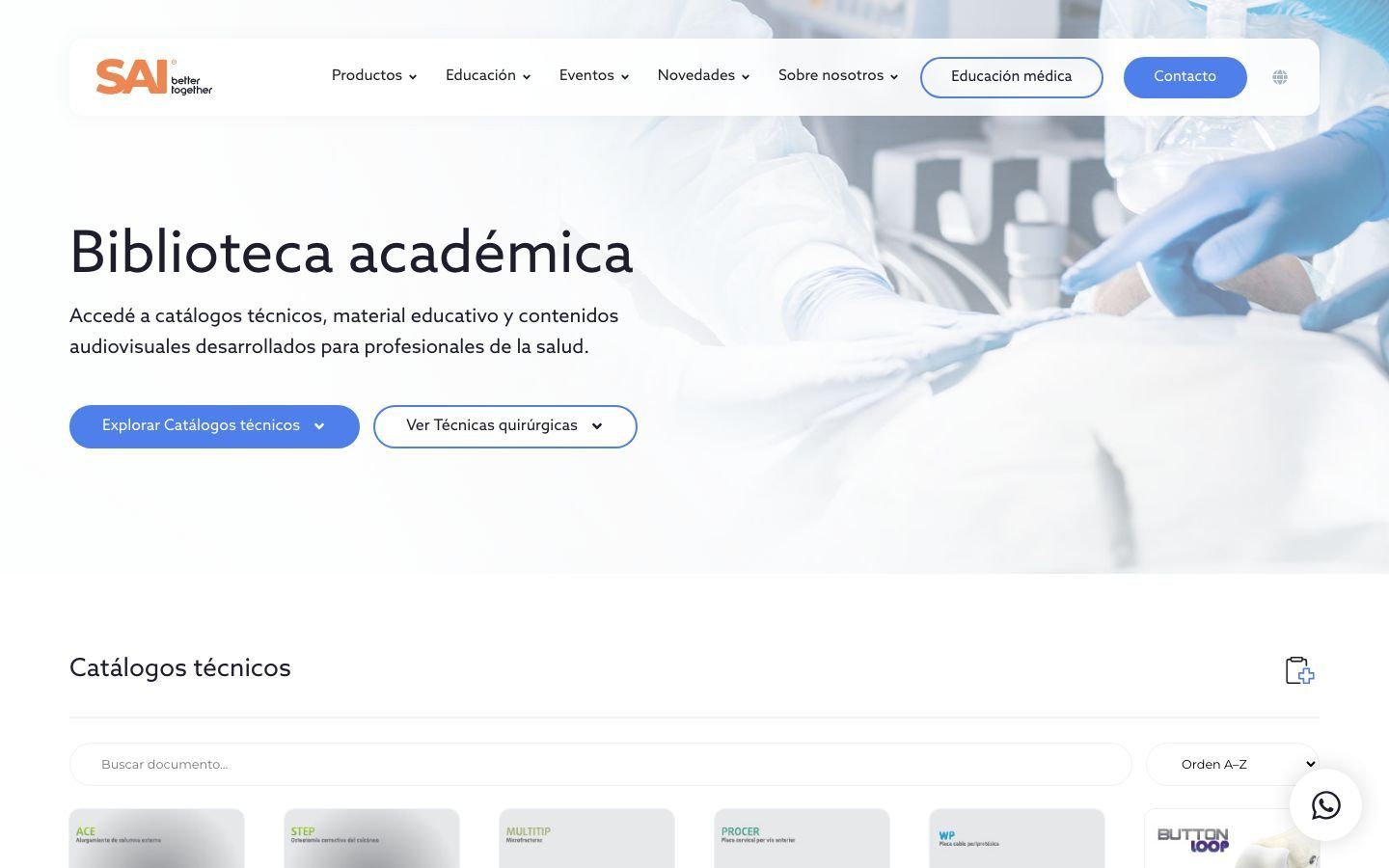
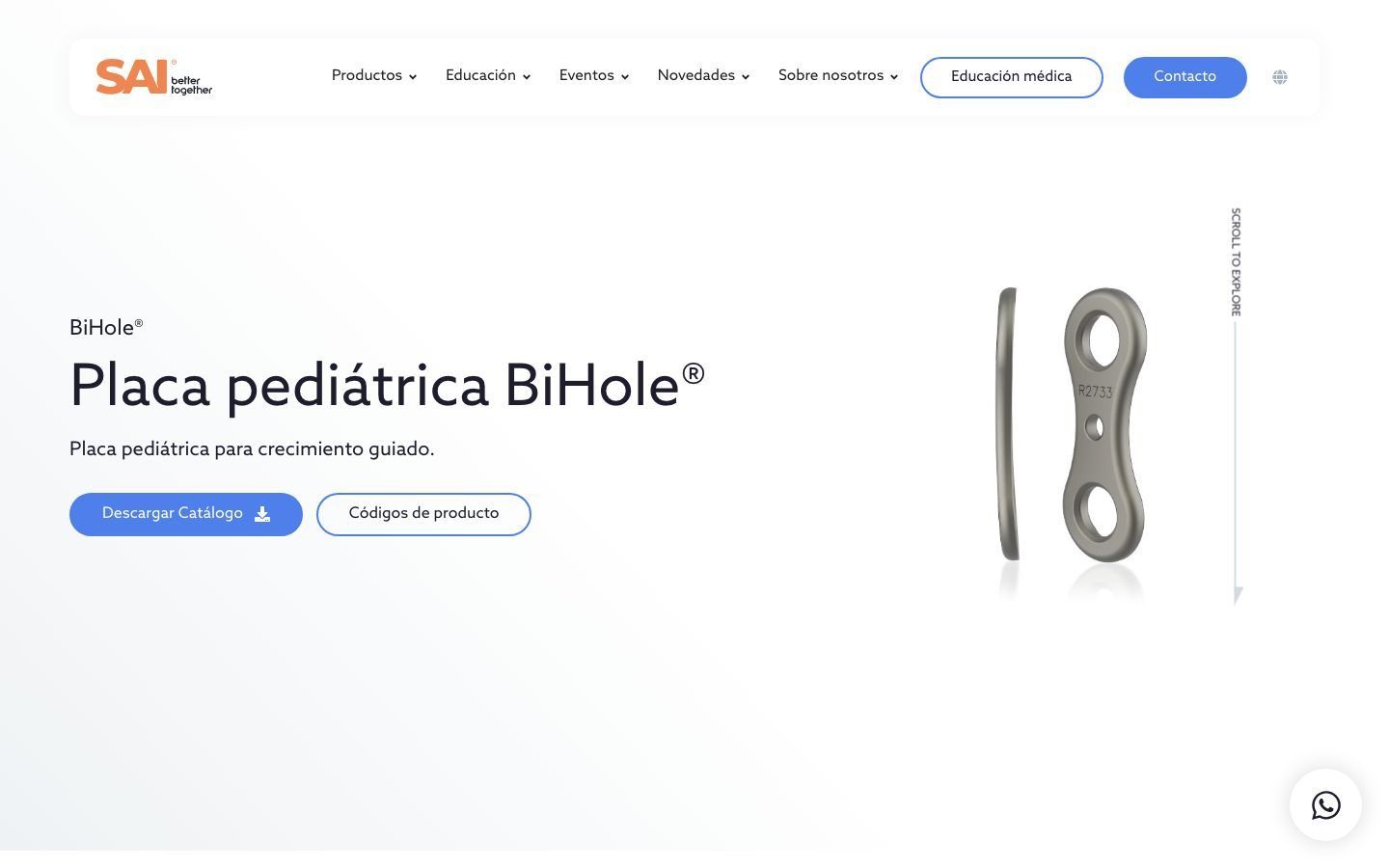
SAI's new platform was built on WordPress with its own content structure, custom fields, and relationships between products, courses, events, and faculty.
Yes. The site is handed over with templates and fields for products, documents, courses, and events, along with how-to guides for the team.
The URLs that get visits or links are mapped, each one is assigned a corresponding new URL, and we check that every redirect reaches its final destination before and after launch.
They're reviewed one by one. If there's an equivalent product page, the PDF is redirected to it. Which documents stay published is decided by the company.
Yes, once the foundation is in place: the site can launch with the catalog, then add the library or medical education without redoing what's already published.