
SAI case study
We designed the product catalog and product pages
Nearly 270 products in orthopedics and trauma, each with its own product page and its documentation alongside.
The starting point
The information was in catalogs and PDFs.
SAI's website showed the implants in a grid and spread the information for each product across catalogs and PDFs.
A surgeon looking for a product landed on a catalog PDF: a standalone document, without the rest of the line alongside, the IFU, or registration information. To find a code or compare two sizes, they had to call.
The information for each product existed, but it was spread across Engineering's technical data sheet, congress presentations, and Medical Affairs' judgment.
What we found
- A product grid with no detail
- Information spread across PDFs
- Documentation far from the product
The approach
A product page that brings together what the product needs to show.
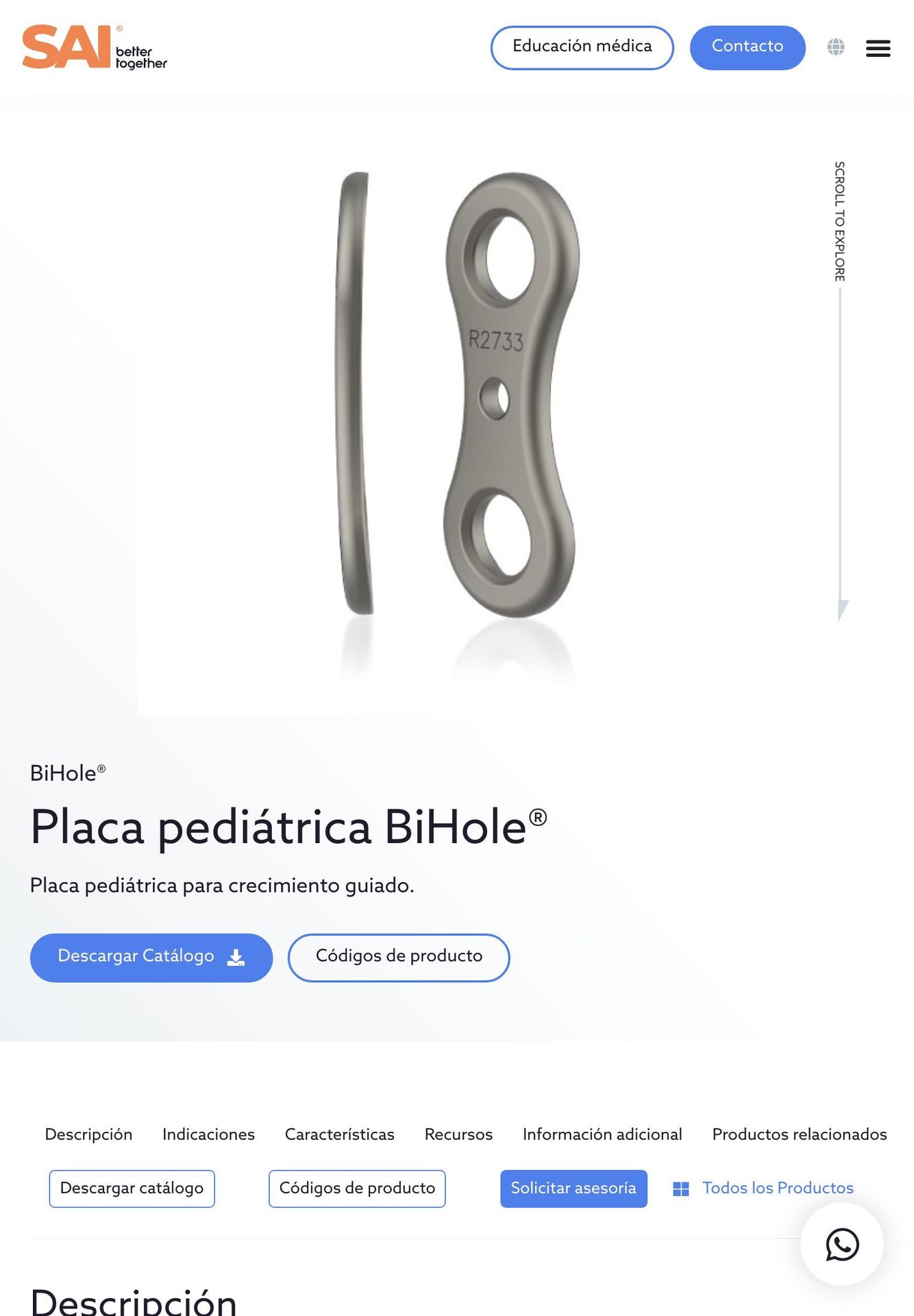
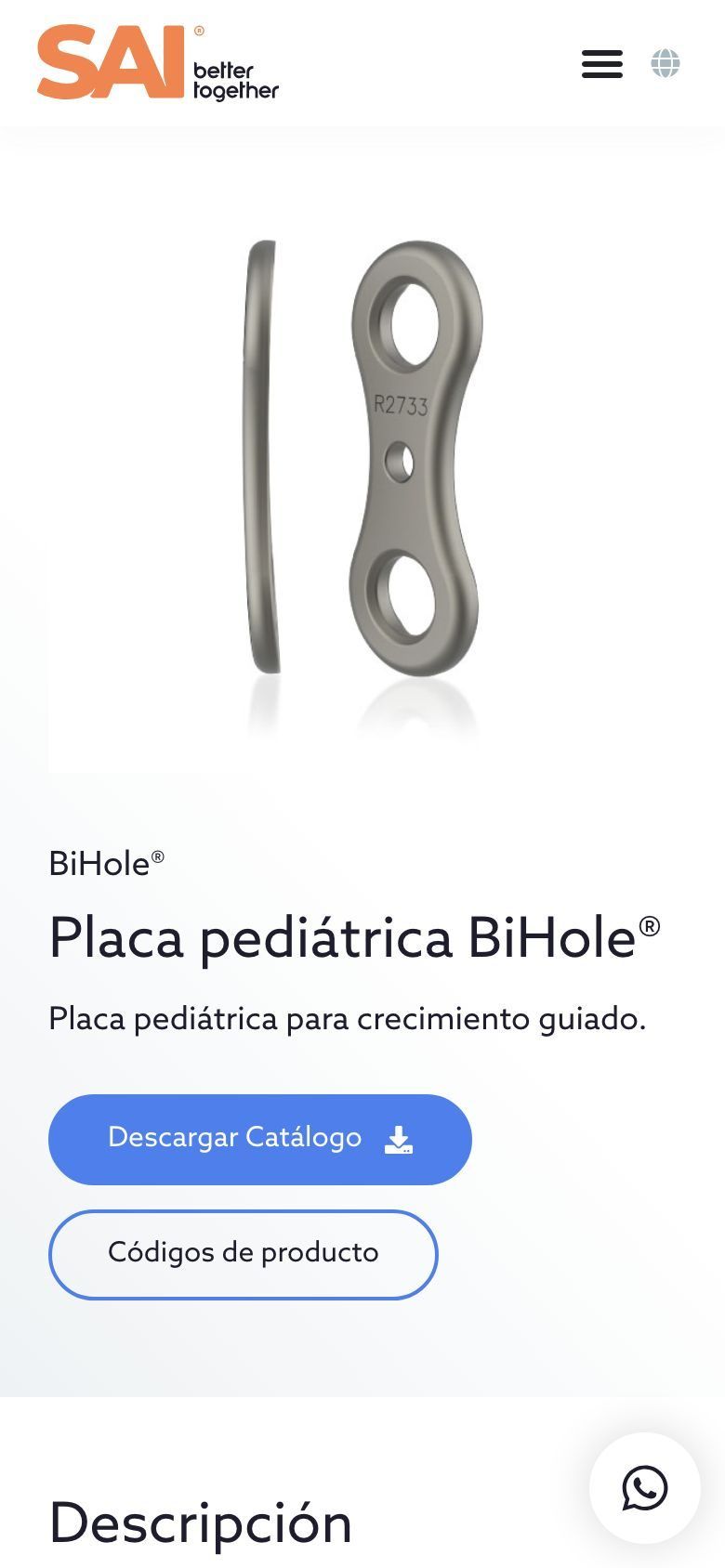
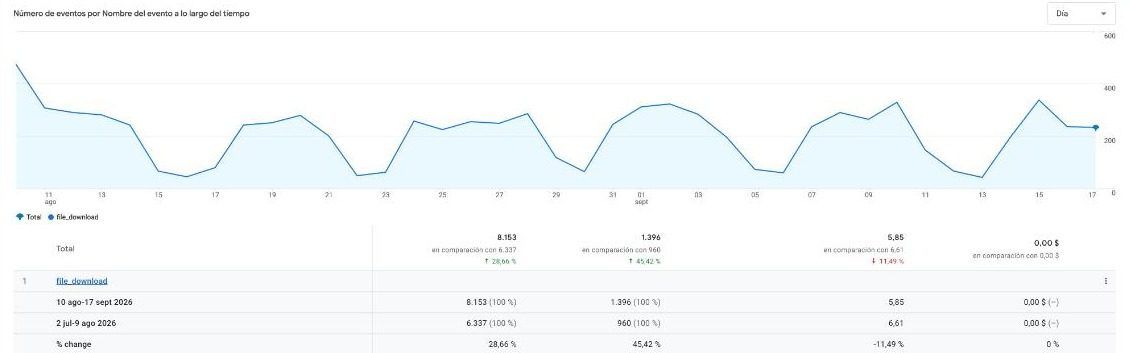
We defined the fields on the product page and grouped the product data so it can be reviewed without paging through a catalog. Downloads sit on each product page, so the material can be opened from the same page.
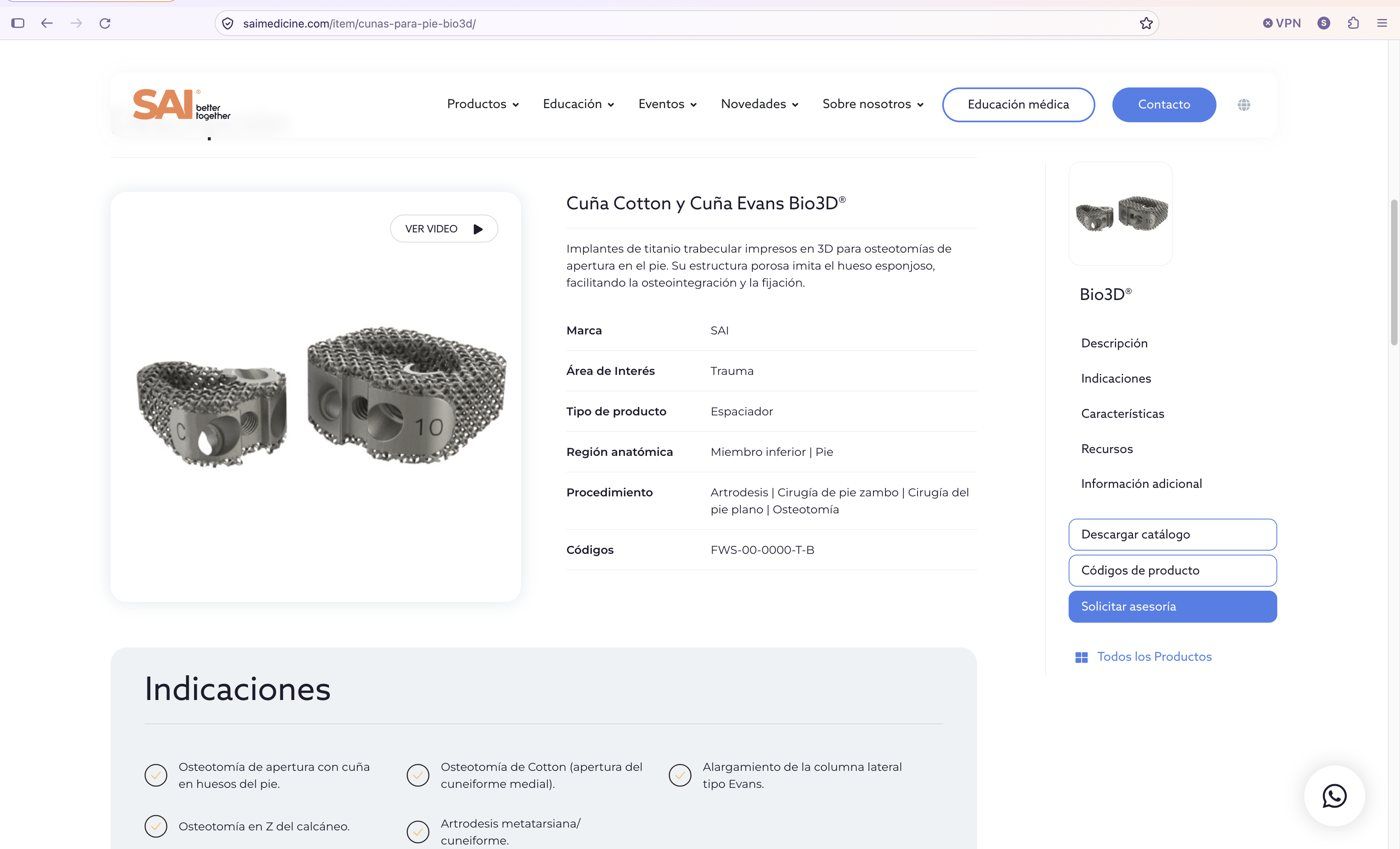
A product page can't be designed before defining what a product page means at that company: what data it contains, which documents are linked to it, who validates each field, and how someone who doesn't know the code gets there. SAI's ended up with 106 fields.
Each product page brings together features, indications, related procedures, available codes, images, documentation, and complementary products.
What we did
- 106-field product page
- Features and indications
- Available codes
- Documentation next to the product
- Complementary products
The work

What stayed in place
- 270products, approximately
- 106fields per product page